
Blog Details
18 Admin July 9, 2026
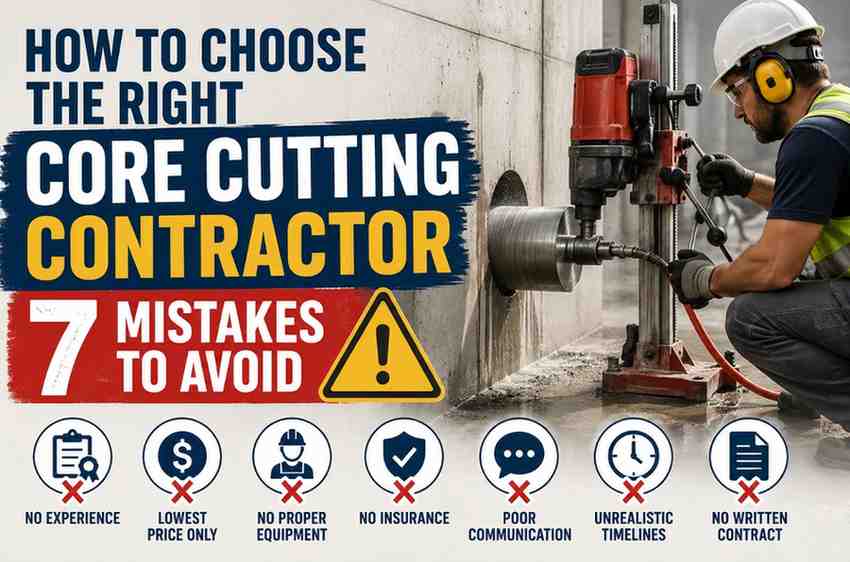
How to Choose the Right Core Cutting Contractor: 7 Mistakes to Avoid
Concrete core cutting looks simple from the outside — drill a clean hole, get the job done, move on. But in reality, it's one of the most frequently mishandled tasks in construction and renovation. Behind every smooth, professional-looking hole is a careful process involving the right equipment, the right technique, and an experienced hand. Skip any of that, and you risk structural damage, safety hazards, or costly rework.
Whether you're a homeowner installing a new bathroom, a contractor running utility lines through a slab, or a facility manager retrofitting an old building, knowing what separates a good core cutting job from a bad one can save you significant time and money.
Here are the seven most common mistakes people make when hiring for core cutting — and how to avoid each one.
What Is Core Cutting, Briefly
Core cutting (or core drilling) uses diamond-tipped hollow drill bits to cut precise, clean circular holes through concrete, brick, or stone — typically for pipes, electrical conduits, HVAC ducts, or anchor installations. Unlike hammer drilling, it doesn't crack or shatter the surrounding material, which is why it's the standard method for any opening in a load-bearing or finished structure.
Now, here's where things commonly go wrong.
Mistake #1: Hiring Based on Price Alone
The lowest quote in the market usually comes with a catch — older machines, worn-out diamond bits, no insurance, and no accountability if something goes wrong. A cracked slab, a severed electrical line, or a damaged water pipe can cost many times more to repair than whatever was "saved" on the original quote.
What to do instead: Treat core cutting like any skilled trade — compare quotes, but weigh them against equipment quality, experience, and liability coverage.
Mistake #2: Skipping Rebar Detection
This is the single most damaging mistake in core cutting. Cutting blindly through reinforced concrete without first scanning for rebar (steel reinforcement bars) can weaken a structural element significantly — sometimes invisibly, until it becomes a serious problem later.
What to do instead: Insist on rebar scanning before any structural cutting. A professional contractor will always check this first, especially in slabs, columns, and load-bearing walls.
Mistake #3: Ignoring Dust and Water Management
Dry-cutting concrete releases fine silica dust into the air — a known respiratory hazard with long-term health risks. It's also messier, less precise, and a telltale sign of an underqualified crew.
What to do instead: Choose contractors who use wet-cutting methods with proper water suppression, especially for indoor or occupied spaces.
Mistake #4: Wrong Hole Diameter or Depth Specifications
A surprising number of jobs go wrong simply because the client didn't communicate exact pipe, conduit, or fitting measurements. The result: oversized holes that need patching, which weakens the wall or floor and looks unfinished.
What to do instead: Confirm exact specs with your plumber, electrician, or HVAC technician before the core cutting crew arrives. Measure twice, cut once still applies here.
Mistake #5: Not Verifying Local Construction Experience
Cutting near basements, older structures, or load-bearing walls requires knowledge of local building practices, soil conditions, and typical construction methods in that region. A contractor unfamiliar with how buildings are typically constructed in your city is taking a bigger risk than they realize — and so are you.
What to do instead: Ask about the contractor's experience with similar buildings or projects in your specific city or locality.
Mistake #6: Skipping Reviews and Verification
Almost anyone can claim to be a "core cutting expert" with a drill and a van. Without checking past work, reviews, or verified credentials, you're trusting that claim blindly — especially risky for larger commercial or industrial projects.
What to do instead: Look for verified listings, past project photos, or customer reviews before finalizing a contractor.
Mistake #7: Not Comparing Multiple Local Options
Most people call the very first number they find online or get from a neighbor. This skips the basic due diligence that protects against mistakes #1 through #6.
What to do instead: Compare at least two to three verified local contractors on pricing, equipment, turnaround time, and reviews before deciding.
Where to Start Your Search
Avoiding these mistakes starts with finding contractors who are actually verified and experienced — not just the first search result. Core Cutting India maintains a directory of core cutting service providers across 500+ cities in India, making it easier to compare options in your specific area instead of relying on guesswork or unverified listings.
The Bottom Line
Core cutting is precision work disguised as simple labor. It looks easy until something goes wrong — and when it does, the cost of fixing it almost always exceeds what a quality contractor would have charged in the first place. A little research upfront — checking experience, verifying methods, and comparing options — is the difference between a clean, safe job and an expensive mistake.
0 Comments
Leave A Comment


Get In Touch
Quick Links
Popular Links
© Digifocus24. All Rights Reserved. Free Business Listing Site in India